 Home >
 A Japanese court has now provided legal recognition to claims that survivors have made for decades. On January 26, 2026, the Tokyo District Court ordered North Korea to pay 22 million yen to each of four plaintiffs, concluding that individuals had been misled by promises of healthcare, education, and stable employment.
Judge Taiichi Kamino didn’t soften the impact, noting that many victims effectively lost the lives they were meant to build.
The program itself goes back to 1959 and lasted for decades. It targeted ethnic Koreans living in Japan, and more than 93,000 people took part. They believed they were moving toward a fairer society. What they found instead was strict control and limited freedom.
Eiko Kawasaki’s experience makes that gap clear. She arrived in 1960 as a teenager and immediately sensed something was off. The port showed a very different reality—visible poverty and little stability. She stayed for 43 years before escaping.
The Legal Fight Took Years
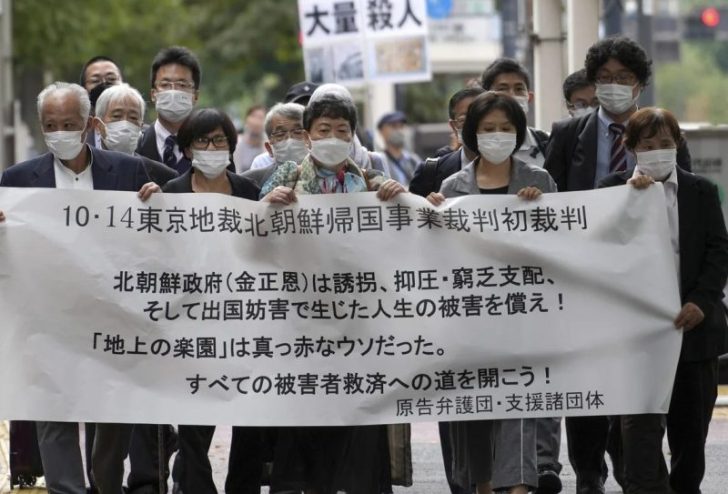
E News / The case began in 2018 but was dismissed in 2022, with the court pointing to jurisdiction issues and the amount of time that had passed.
That wasn’t the end. In 2023, the Tokyo High Court reopened the case.
By 2026, the ruling finally came through.
Securing a judgment and collecting compensation are not the same. North Korea did not participate in the case and maintains no diplomatic relationship with Japan, making enforcement difficult.
Lawyers say asset seizure could be one option. Survivors are also asking the government to do more, pointing out that their situation deserves similar urgency to other past cases.
The Scheme Is Not New

CBS / Reports show that the same tactics are still in use today. North Korea has shifted from physical relocation to digital deception.
The method has changed, but the core idea remains the same: Promise something attractive and extract value.
In recent years, North Korean operatives have entered the global remote job market using fake identities. They pose as skilled IT workers, land high-paying jobs, and funnel earnings back to the regime. U.S. officials estimate that this operation brought in nearly $800 million in 2024 alone.
Cybersecurity investigations have revealed a highly organized system behind these fake workers. This is not random freelancing or small-scale fraud. It is a structured, state-run effort with clear roles and daily operations.
Workers follow normal schedules and complete real tasks for companies around the world. Behind the scenes, managers track applications, assign devices, and control payments. Some operatives even pass background checks and onboarding processes before being discovered.
One of the most surprising details is how North Korea scales this operation. Instead of handling everything internally, it recruits people from other countries to help. Developers from Iran, Syria, and beyond are hired to conduct interviews and act as the “face” of fake identities.
This division of labor makes the system harder to detect. Facilitators manage the fake profiles and job applications, while recruits handle calls and technical tests. In one case, a facilitator reached out to more than 50 engineers in a single week.