
 Home >
 A Japanese court has finally put a legal stamp on something survivors have said for decades. North Korea sold a dream, and that dream turned into a nightmare. On January 26, 2026, the Tokyo District Court ordered North Korea to pay 22 million yen to each of four plaintiffs. The court found that the regime lured people with false promises of free healthcare, education, and stable jobs.
Judge Taiichi Kamino made it clear that the damage ran deep, stating that most victims had their lives effectively destroyed.
The scheme began in 1959 and ran for decades, targeting ethnic Koreans living in Japan. More than 93,000 people packed their bags, believing they were heading to a fair and equal society. What they found instead was poverty, control, and a complete lack of freedom.
Eiko Kawasaki’s story captures that shock in a raw way. She arrived as a teenager in 1960 and immediately saw the truth at the port. Instead of a thriving country, she saw starving people, crumbling buildings, and a bleak future. She spent 43 years trapped there before escaping, leaving behind family members she may never see again.
The Legal Fight Took Years
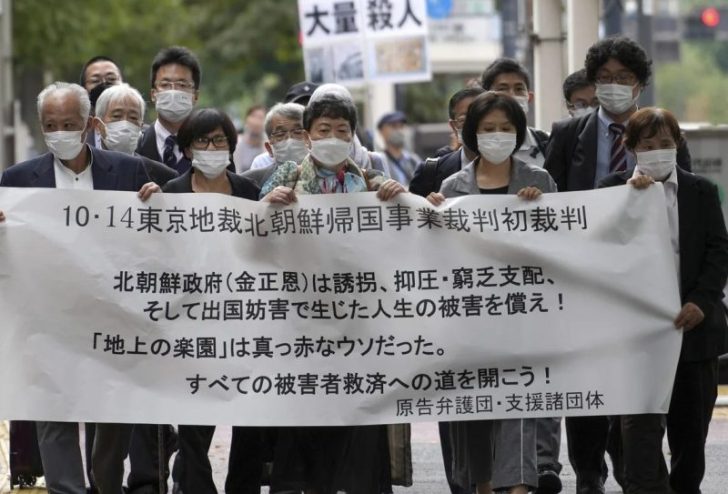
E News / The case was first filed in 2018 and was initially dismissed in 2022. The court at that time argued it had no jurisdiction and that too much time had passed.
That changed in 2023 when the Tokyo High Court stepped in and reopened the case. By 2026, the court recognized that justice could not be blocked by technical limits alone. Survivors and lawyers now see the verdict as a turning point, even if collecting the money remains unlikely due to the lack of diplomatic ties.
Winning in court and getting paid are two very different things. North Korea did not show up, did not respond, and has no direct ties with Japan that would make enforcement easy. This leaves victims in a strange position where they are legally right but practically stuck.
Lawyers suggest that seizing North Korean assets in Japan could offer a path forward. Survivors like Kawasaki also want the Japanese government to step in with stronger support. They argue that their suffering should be treated with the same urgency as past abduction cases.
The Scheme is Not New, Though

CBS / Reports show that the same tactics are still in use today. North Korea has shifted from physical relocation to digital deception.
The method has changed, but the core idea remains the same: Promise something attractive and extract value.
In recent years, North Korean operatives have entered the global remote job market using fake identities. They pose as skilled IT workers, land high-paying jobs, and funnel earnings back to the regime. U.S. officials estimate that this operation brought in nearly $800 million in 2024 alone.
Cybersecurity investigations have revealed a highly organized system behind these fake workers. This is not random freelancing or small-scale fraud. It is a structured, state-run effort with clear roles and daily operations.
Workers follow normal schedules and complete real tasks for companies around the world. Behind the scenes, managers track applications, assign devices, and control payments. Some operatives even pass background checks and onboarding processes before being discovered.
One of the most surprising details is how North Korea scales this operation. Instead of handling everything internally, it recruits people from other countries to help. Developers from Iran, Syria, and beyond are hired to conduct interviews and act as the “face” of fake identities.
This division of labor makes the system harder to detect. Facilitators manage the fake profiles and job applications, while recruits handle calls and technical tests. In one case, a facilitator reached out to more than 50 engineers in a single week.